
TMJ, TMD, and muscle pain
TMJ is the temporomandibular joint. TMD means temporomandibular disorders—a group of conditions involving the TMJ joints, chewing muscles, or related headaches.
Muscle-related pain, including myofascial pain, is common. Tooth problems, headaches, nerve pain, and ear conditions can also cause pain around the jaw. An in-person examination helps distinguish these causes; more than one can be present.
This guide focuses on problems inside the joint, such as disc displacement, inflammation, and restricted movement. Joint surgery does not treat myofascial pain itself. If you have both joint and muscle pain, muscle symptoms may still need separate treatment after surgery.
Muscle pain and nonsurgical care: what you can try at home and when to seek help →
Common TMJ joint symptoms
Clicking, popping, or grinding
A repeatable click often reflects a displaced disc slipping back into place as the jaw opens. It can be a sign of altered joint mechanics, even without pain. A click alone does not prove damage or mean you need surgery; pain, locking, limited opening, or a changing bite should be assessed.
A note for growing patients: Studies by Chi Yang and colleagues link disc displacement in some adolescents with reduced growth or loss of height of the jaw’s condyle. This may contribute to an uneven jaw or a smaller, set-back lower jaw—a skeletal Class II jaw relationship. In selected adolescents with disc displacement and existing jaw deformity, a randomized trial found better jaw-growth outcomes with disc repositioning plus a functional appliance than with the appliance alone.
Separate research links disc displacement and a set-back jaw with smaller airway dimensions, but this does not prove that a click causes sleep apnea or that early TMJ surgery prevents it. New symptoms deserve early assessment, especially during growth. Treatment may be worth considering before changes progress; surgery depends on the examination, imaging, and individual risks—not clicking alone.
Research: Yang and colleagues: adolescent jaw growth; disc repositioning randomized trial; jaw structure and airway dimensions.
Pain
Pain may be felt in front of the ear or when chewing, opening, or talking. It can come from the joint, the surrounding muscles, or both.
Limited movement or locking
The jaw may feel stiff, catch, or not open as far as usual. Tell us if it affects eating or speaking, or if your bite changes. If the jaw becomes stuck open or you cannot open enough to drink, seek prompt care.
The temporomandibular joint (TMJ)
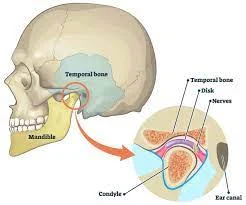
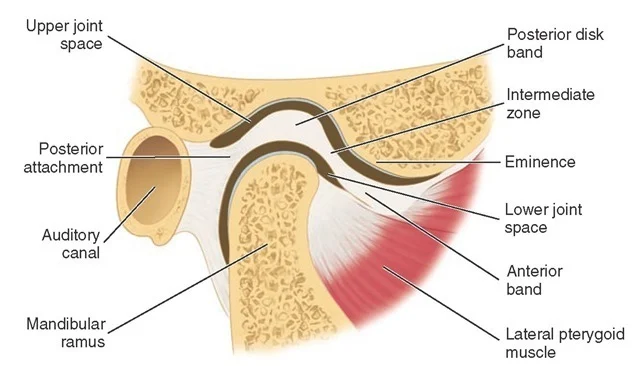
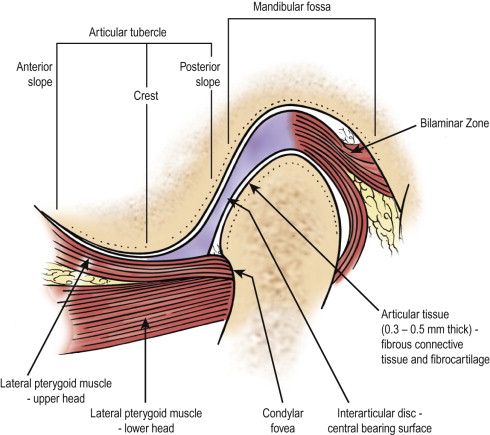
You have a TMJ joint just in front of each ear. The rounded end of your lower jaw—the condyle—moves against the skull. Between them is a small pad of tissue called the disc.
Why can the disc slip?
The disc has attachments around it, including tissues behind it called the retrodiscal tissues. Stretching or damage to the attachments may let the disc move out of its usual position. Muscle forces, the shape of the joint, and injury may also play a part.
The tissue behind the disc offers limited resistance to stretching. Disc displacement can have several contributing factors.
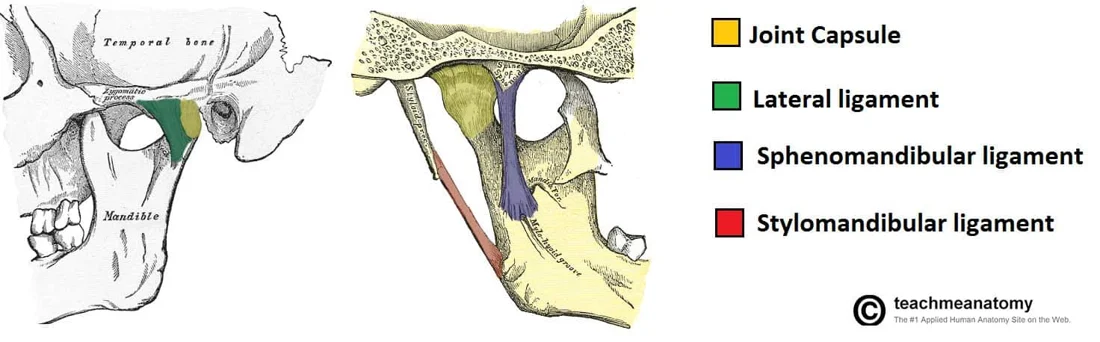
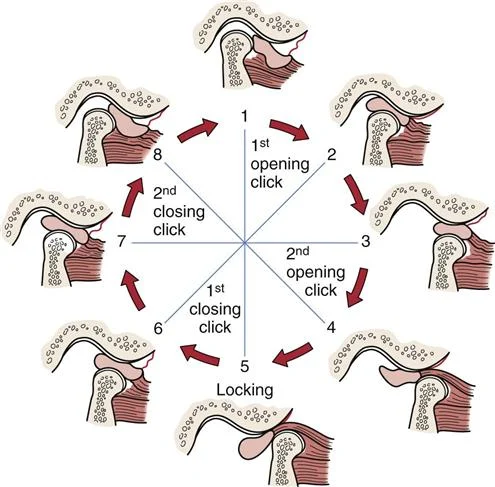
If the displaced disc slips back over the jaw bone during opening, it can click. If it stays displaced, opening may be limited. A click that stops does not, by itself, prove that the joint has healed or worsened.
When the disc slips out of position, the joint can lose some of its normal cushioning and pressure distribution. Other tissues then carry more load. If the protective joint surfaces also wear away, advanced arthritis can lead to bone-on-bone contact.
What about the muscles?
Think about doing biceps curls. Sensors in your muscles and tendons give your nervous system feedback as you lift. Muscle spindles sense stretch; Golgi tendon organs sense tension. They help control movement, but they are not an automatic shutoff that prevents overuse.
The lateral pterygoid helps move the jaw and has relatively few muscle spindles—the sensors that detect stretch—compared with the main jaw-closing muscles.
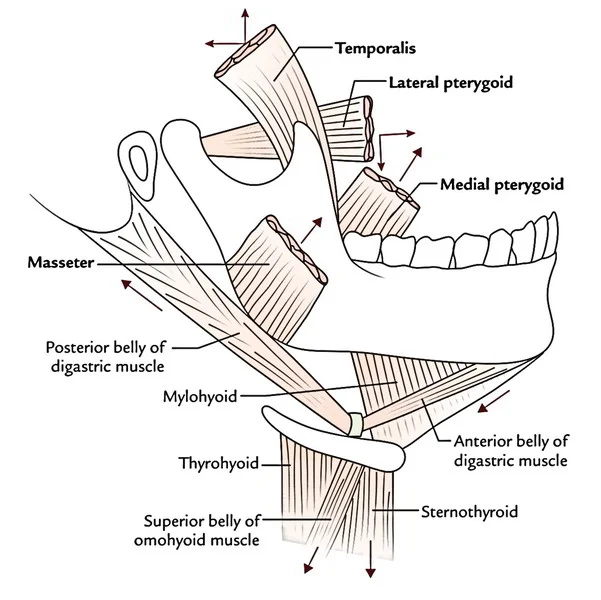
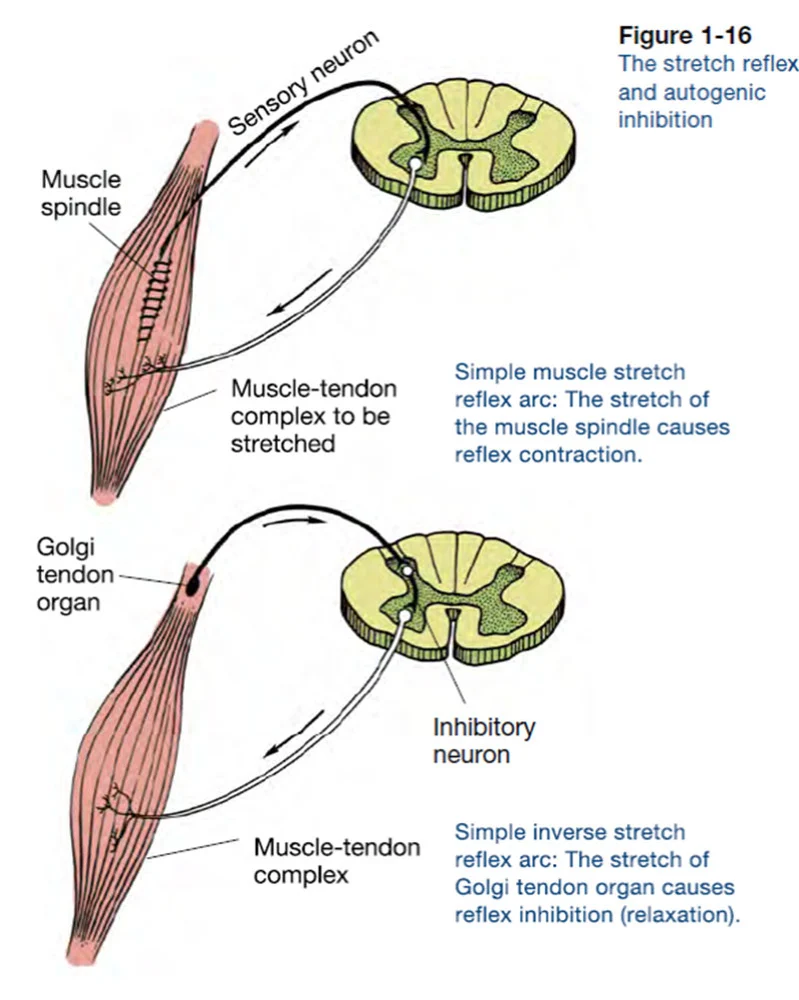
Further reading: Muscle sensory feedback; human lateral pterygoid muscle spindles; comparison of spindle counts in jaw muscles; disc attachment mechanics (porcine study); retrodiscal tissue mechanics (porcine study); human anatomy and disc displacement.
Cadaver demonstrations
Dissections: Drs. Westesson & Eriksson, Lund, 1985; uploaded by Freedom Physical Therapy Services. Real cadaver footage.
Sagittal (side) views simplify 3D movement: discs can shift inward, outward, or rotate; sideways or forward motion can also click. Patterns vary by patient. Disc positions · Joint sounds.
Normal movement
The disc stays between the joint surfaces as the jaw opens and closes.
Normal Temporomandibular Joint (TMJ) Movement · Uploaded by Freedom Physical Therapy Services
youtube.com/watch?v=Nmg3xl13TY0&t=0sClicking: the disc slips back into place
The disc starts forward and slips back over the condyle during opening. This movement can produce a click and is called disc displacement with reduction.
TMJ disc displacement with reduction · Uploaded by Freedom Physical Therapy Services
youtube.com/watch?v=upbs7Hm9tRQ&t=0sNo click: the disc stays displaced
Here, the disc stays forward instead of slipping back into place. Opening may be restricted. This is called disc displacement without reduction. A joint without clicking is not necessarily abnormal, and a click stopping alone does not tell us what happened to the disc.
TMJ non-reducing disc displacement · Uploaded by Freedom Physical Therapy Services
youtube.com/watch?v=MG_JqF1mNb0&t=27sWhy can jaw problems feel like an ear problem?
The TMJ joint sits just in front of the ear. A small band of tissue called the discomalleolar, or Pinto’s, ligament connects the joint region to the malleus, one of the tiny bones in the middle ear. It passes through a narrow opening in the skull called the petrotympanic fissure.
This connection develops before birth. Anatomical studies describe it as a remnant of an early connection between the developing jaw muscles and middle ear. That explains why these structures are connected, but does not by itself explain someone’s ear symptoms.
Jaw problems can contribute to ringing in the ears (tinnitus). Pulling on this ligament is one proposed explanation, but studies disagree about how much it moves the middle-ear bones. A displaced disc does not automatically mean that this ligament is causing hearing loss.
Do not expect TMJ surgery to improve tinnitus or hearing. Ringing may persist, and hearing may stay the same or worsen. Temporary hearing changes can occur after surgery; hearing loss is a less common complication.
If you have tinnitus or concerns about your hearing, see an ear, nose, and throat (ENT) specialist and have a hearing test (audiogram). Sudden hearing loss needs immediate medical attention.
References: the ligament’s anatomy; developmental connection; cadaver traction study; contrasting cadaver findings; NIDCD: tinnitus; hearing risks after TMJ arthroscopy; NIDCD: sudden hearing loss.
What will the scan tell us?
At the appointment, we’ll check how far your jaw opens, where it hurts, and how your teeth meet. We’ll ask about locking, previous treatment, and any change in your bite.
Depending on the clinical findings, we usually evaluate the joint with MRI, cone-beam CT (CBCT), medical-grade CT, or a combination.
CBCT and medical-grade CT show the bone in three dimensions. They can show changes in the joint’s shape and surface, such as erosion or bony spurs. Flattening can also reflect remodeling, so one feature alone does not tell the whole story.
MRI shows the disc and other soft tissues. A narrow-looking space on a CBCT does not, by itself, show where the disc is or prove it is absent. We may need an MRI if disc position or inflammation would change the treatment plan.
We look at the scan together with your symptoms. Old scans and dental records can help us tell whether something has changed.
What can help?
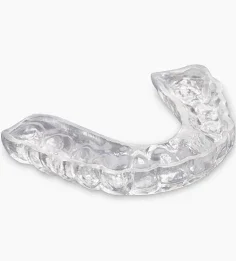
Treatment depends on whether symptoms come from the joint, the muscles, or both. Softer foods during a flare, reducing clenching, physical therapy, medication, or an appropriate appliance may help—even when there is a structural problem inside the joint. Dr. Yim works with Rutgers orofacial pain clinicians and referring dentists for nonsurgical care, including nightguards or anterior repositioning appliances when appropriate. See the conservative care guide for home care and who to see for each part of treatment.
Botulinum toxin (Botox) may be considered for selected patients with persistent muscle-related pain. Evidence for TMD pain relief is mixed, and this use is off-label. It does not put a displaced disc back in place.
If symptoms come from a treatable structural problem inside the joint, surgery may help. The decision depends on your examination, imaging, response to conservative care, and the benefits and risks of the procedure. Muscle pain may still need separate treatment before or after surgery.
What does arthroscopy involve?
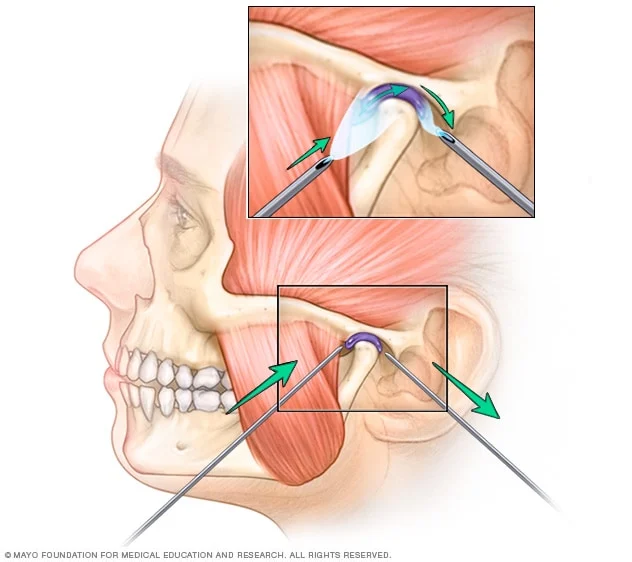
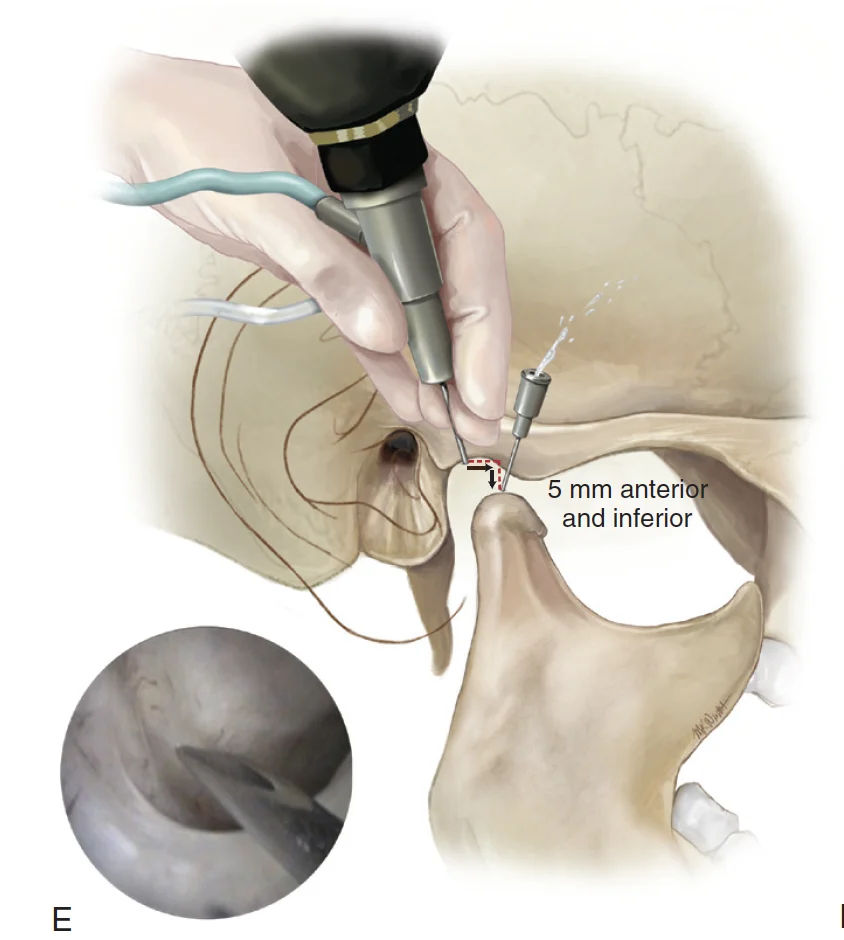
A small camera enters the joint through a small opening near the ear. It lets the surgeon see inside and, depending on the procedure, wash the joint or treat inflamed tissue and adhesions. Arthrocentesis is a washout through needles, without the same camera-guided work.
What about regenerative injections?
Dr. Yim may add a regenerative injection during minimally invasive TMJ surgery to support healing. The product used varies with your treatment plan. These injections do not guarantee regrowth of the disc or cartilage.
Before surgery, we’ll discuss the product planned for you, its potential benefits, risks, and alternatives.
Is that the same as putting the disc back?
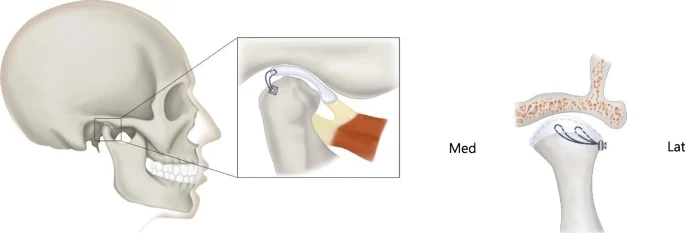
No. Disc repositioning, also called discopexy, is a separate step considered for selected patients. The surgeon moves the disc and secures it with sutures or another fixation method. Not every arthroscopy includes this, and the exact technique depends on the joint and the planned operation.
Can minimally invasive surgery help preserve the joint?
In selected patients, arthroscopy can treat inflammation and restricted movement. Disc repositioning may be considered to restore the disc’s relationship with the jaw bone and improve how the joint carries load. Preserving joint function is a treatment goal, but surgery has not been established as a way to prevent future damage in an otherwise painless clicking joint.
Am I too old for a small-camera procedure?
There is no single birthday that rules arthroscopy in or out. Joint condition, symptoms, previous treatment, and the operation being considered all matter. More advanced damage may call for a different approach.
What about open surgery or joint replacement?
These are options for selected structural problems, such as severe damage or fusion. They permanently change the joint and need a separate discussion of benefits, alternatives, and risks.
How much time will I need to recover?
For some arthroscopic procedures, people return to school or desk work within several days to a week. Swelling, soreness, and stiffness can last longer. Disc fixation, other procedures done at the same time, and the demands of your job can change that timetable.
We’ll give you instructions for food, medications, activity, and jaw movement for your operation. Exercises after a washout may differ from exercises after a disc repair, so follow your own plan.
What are the risks?
These depend on the procedure. They include bleeding, infection, nerve injury, a changed bite, stiffness, and pain that persists or returns. Ear structures can also be affected. Some patients need further treatment.
Will I need braces or jaw surgery too?
Dr. Yim recommends braces as part of the treatment plan for most of his TMJ arthroscopy patients. Your bite and joint condition determine whether they are appropriate for you. Your orthodontist helps manage tooth alignment and your bite after surgery. Dr. Yim will coordinate the plan and timing with your orthodontist, ideally before the operation. Braces address tooth alignment and bite; they are not a guaranteed treatment for joint pain.
Corrective jaw surgery changes the position of the jaws. Joint surgery treats a problem within the joint. They have different goals. Jaw surgery may improve, leave unchanged, or worsen TMJ symptoms; it is not a guaranteed treatment for joint pain.
Will taking out my wisdom teeth fix this?
A wisdom tooth problem and a TMJ joint problem can occur together. Removing a tooth may address pain from that tooth, but it should not be expected to correct a displaced disc. We assess the reasons for each treatment separately, even if procedures might be done during the same anesthetic.
If your jaw becomes stuck open or you suddenly cannot open enough to drink, seek prompt clinical care. For breathing or swallowing difficulty or rapidly increasing swelling, seek emergency care.
Additional illustrations from Dr. Yim’s TMJ teaching presentation (March 2025). Original labels and credits are retained where present. Tap an illustration to see it larger.
Sources & further reading
- NIDCR: Temporomandibular disorders
- Background discussion: TMJ health and jaw surgery
- AAOMR/AAOP: imaging the TMJ joint
- AAOMS: treatment of pain and dysfunction inside the joint
- Royal Free London: arthroscopy and recovery
Updated October 2026. Your care team’s instructions take priority over general information.
For a helpful full-length explanation of TMJ anatomy, watch “The Yoint” on Dr. Andy Lane’s YouTube channel.
youtube.com/watch?v=nH8KG3fIoBM